Polyurethane Sealant Application Techniques
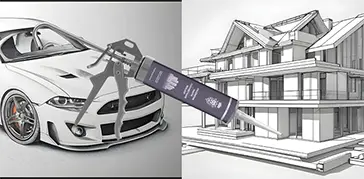
Polyurethane sealant application is of great importance in both the construction and automotive industries in terms of filling, insulation, and assembly quality. If the correct technique is not applied, the sealant will not provide sufficient adhesion, will not completely fill gaps, and its durability will decrease. In this article, we will examine all the details of polyurethane sealant application, step-by-step methods, and points to consider.
1. Surface Preparation
Surface preparation is the most critical stage in polyurethane sealant application. A clean, dry, and smooth surface directly affects the sealant's durability and adhesion.
- All dust, dirt, oil, or old filler materials on the surface must be completely removed.
- Oil and rust residues must be removed from metal and plastic surfaces, especially in automotive applications.
- Loose particles and dust must be removed from concrete, brick, or drywall surfaces.
- Sealant should not be applied to damp or wet surfaces; drying and adhesion problems may occur.
2. Selection and Preparation of Sealant
The correct type of sealant must be selected before application:
- Standard sealant: Suitable for general filling and insulation work.
- Fast-drying sealant: Preferred for situations requiring urgent assembly and repair.
- Highly flexible sealant: Used in moving joints and vibrating areas.
- Waterproof sealant: Provides waterproofing for bathrooms, kitchens, exterior walls, and vehicle junctions.
Before application, it is important to prepare the gun or tube for use and ensure the product is homogeneous.
3. Application Methods
Sealant should be applied using the correct method according to the application area:
Layered Application
Deep gaps should not be filled all at once. Applying it in layers ensures even expansion of the sealant and prevents overflow.
Controlled Tightening
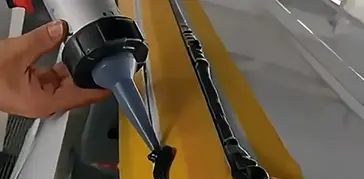
When applying with a sealant gun, the sealant must be distributed evenly into the gap. Applying it too quickly will cause overflow, while applying it too slowly may prevent the gaps from being filled.
Angle and Position
The gun or tube angle should be perpendicular to the surface or slightly inclined. The sealant should be spread evenly to the corners and joints of the seams.
4. Shaping and Cleaning
After applying the sealant, it can be shaped with a spatula or glove. Excess material should be removed before it hardens. Equipment must be cleaned thoroughly after application; otherwise, the gun will clog and performance will decrease.
5. Drying and Setting Times
Drying time varies depending on the type of sealant and the application thickness:
- Fast-drying sealants: The surface dries within 20–30 minutes.
- Standard sealants: Provide touch-dryness within 2–4 hours; full hardening may take several hours.
- In layered applications, the waiting time between layers is important.
6. Application Examples in the Construction Sector
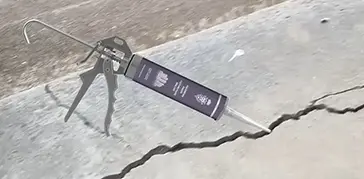
- Filling gaps and providing insulation in window and door installations.
- Sound and heat insulation at wall, ceiling, and floor joints.
- Waterproof sealant application at exterior wall and roof connections.
- Waterproofing and gap filling in bathroom and kitchen joints.
7. Application Examples in the Automotive Sector
- Filling gaps between vehicle body panels and door joints.
- Providing water and dust insulation at the junctions of the trunk and engine hood.
- Applying mastic to joints for vibration and noise insulation.
- Providing flexible sealing at metal and plastic junctions.
8. Points to Consider
- Surface cleaning and drying must be ensured.
- Gloves, goggles, and a mask should be worn when applying mastic.
- Layered application should be used, and expansion allowance should be provided.
- Excess sealant should be cleaned up before it overflows.
- Equipment should be cleaned after application, and hardened sealant is difficult to remove.
9. Advantages of the Application
- It provides gap filling, water, air and sound insulation.
- Its flexible structure minimizes the risk of cracking.
- It offers a wide range of applications in both construction and automotive industries.
- It is easy to apply and dries quickly, increasing work efficiency.
- It is long-lasting and durable, absorbing vibrations and movements.
The information in this text may vary from time to time depending on the manufacturer. Always check the product label.